About
Thirty countries, forty-eight states, and one long way back to himself
In 2009, Chris Haulmark had spent eleven years climbing the IT ladder, from PC technician to manager for a government agency. He had a house, a marriage, two kids. By most measures, he had it made. He figured he'd get around to seeing the world once he retired. Then his father died at 54 — without ever getting there.
The question that wouldn't leave
His father had worked his whole life for a retirement he never reached. Chris started asking himself the obvious, uncomfortable question: if the same thing happened to him, would he have any regrets? He kept circling it for months, torn between the life he had and the one he suspected he actually wanted.
What finally moved him wasn't a plan. It was his kids. They wanted to see the world, and they wanted to see it through him. So in 2014, he got his first passport, quit his job, and started a vlog for the only two people he was making it for — his son and his daughter.
Forty-eight states first, then the world
Before he ever left the country, he'd already driven through 48 US states. Then he crossed into Mexico at Laredo and spent the next two years moving overland — all of Central America without a single flight, Europe from Germany down through the Balkans to Istanbul, a stint training as a hostel manager in Cambodia, a month wandering Rajasthan, and the Annapurna Circuit in Nepal, where he crossed Thorong La Pass at around 5,400 meters — the highest he's ever stood on his own feet, after a 13-day trek.
By the numbers, since then: 30 countries and territories and 48 US states. The name for all of it — Deaf Wanderer — is one he picked himself, and it's not a metaphor. He's been Deaf since he was one year old, after a bout of spinal meningitis. He grew up the only Deaf person in a hearing family in Arkansas that communicated in Signing Exact English rather than ASL, and he didn't find the Deaf community until after high school.
He's always been careful about how much that fact leads the conversation. Early on, he deliberately kept it out of the first sentence of anything he wrote about himself — not out of shame, but because he'd watched what happens the moment people learn it: everything else about you gets filtered through that one lens, and you become “that deaf guy” before anyone sees what you're actually doing. So the videos were mostly just travel videos. They happened to be in sign language.
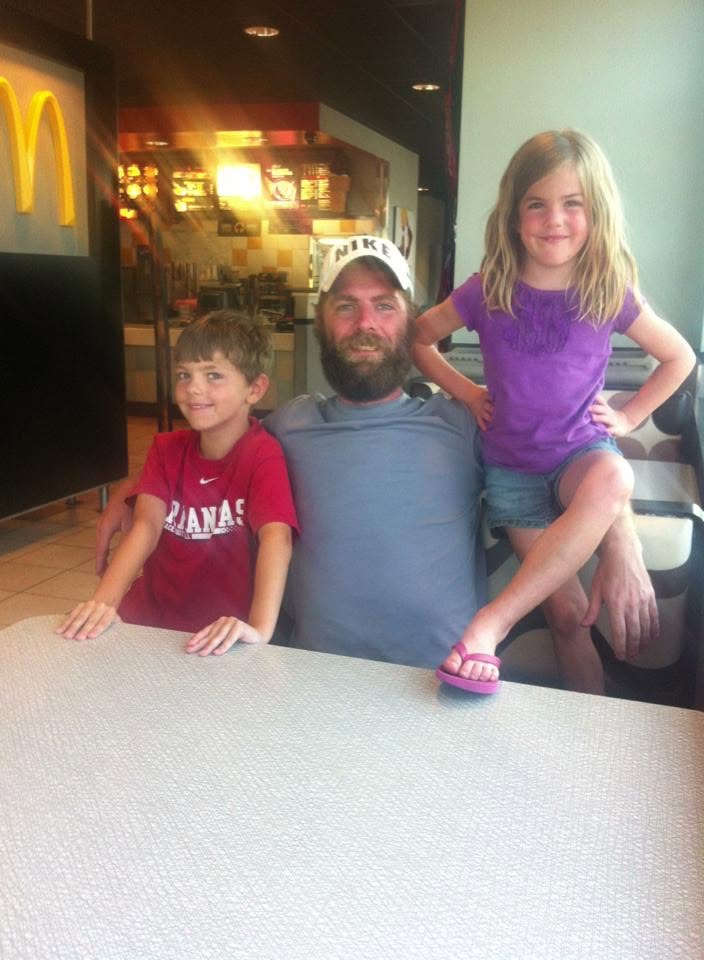
July 2013, years before any of this started — “Fatherhood is THE VERY BEST THING that ever happened to me in my life, by a factor of at least a hundred, a thousand, and I urge any man not to be afraid of it.”
The sunrise that changed the terms
About a year into the trip, sitting on a cliff in Nepal watching the sun come up, something clicked. He realized he'd spent 35 years living to make other people proud of him — and for the first time in his life, he felt proud of himself, for his own growth, on his own terms. That's the moment everything since has been built on.
The trip ended when his kids asked him to come home — almost two years in, after Central America, Europe, and Asia. He went, no hesitation. What came next was a decade of throwing that same energy into the Deaf community: ten years as a docent and later leadership at the Museum of Deaf History, Arts and Culture, board seats with the Kansas Association of the Deaf and later the National Association of the Deaf, a run for the Kansas state legislature he lost by two percent, and a pro se appeal he argued himself that changed ADA case law at the federal circuit level.
By 2026 he'd stepped down from both boards on purpose — not retreating, just done being the person everyone waits on. These days he measures it differently: not who's in the room, but who he built the capacity to lead without him.
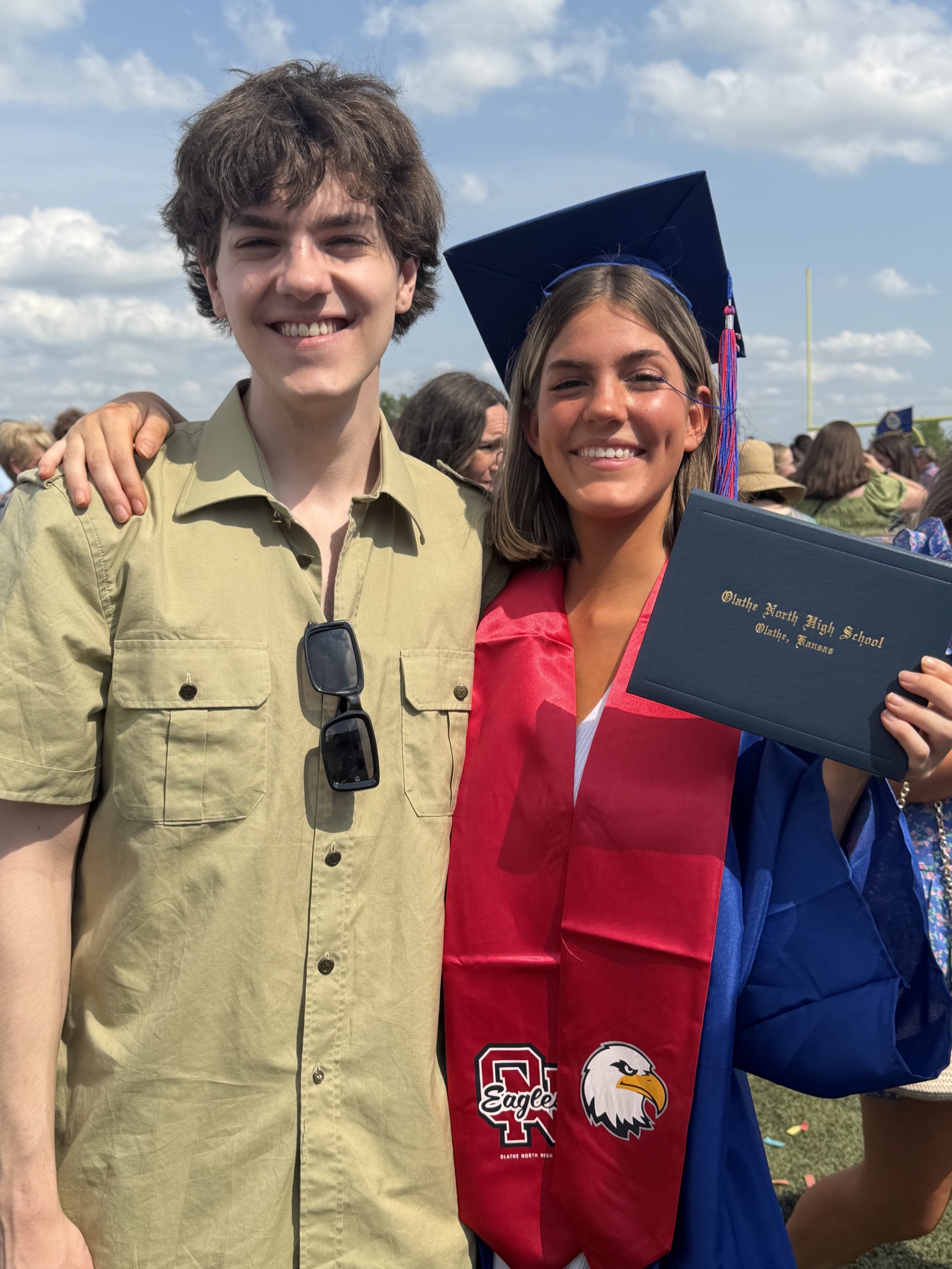
May 2026 — his daughter Maci's graduation, the same fatherhood, the kids grown. This is the photo that actually set him free to go again.
Why Bangkok, why now
Both kids finished school in 2026 — officially, for the first time in over two decades, nobody is under his direct care. Days after his daughter walked at graduation, he was signing a six-month lease on a condo in Bangkok. It's not a vacation and it's not the destination either — it's a warm-up base, a way to get his legs back under him before he's no longer tied to one place for long stretches at a time.
Along the way, a mentee named Eliza became something more — someone he credits directly with accelerating how fast he's grown, internally, over the past couple of years. She's based in Missoula for now; the plan is still taking shape.
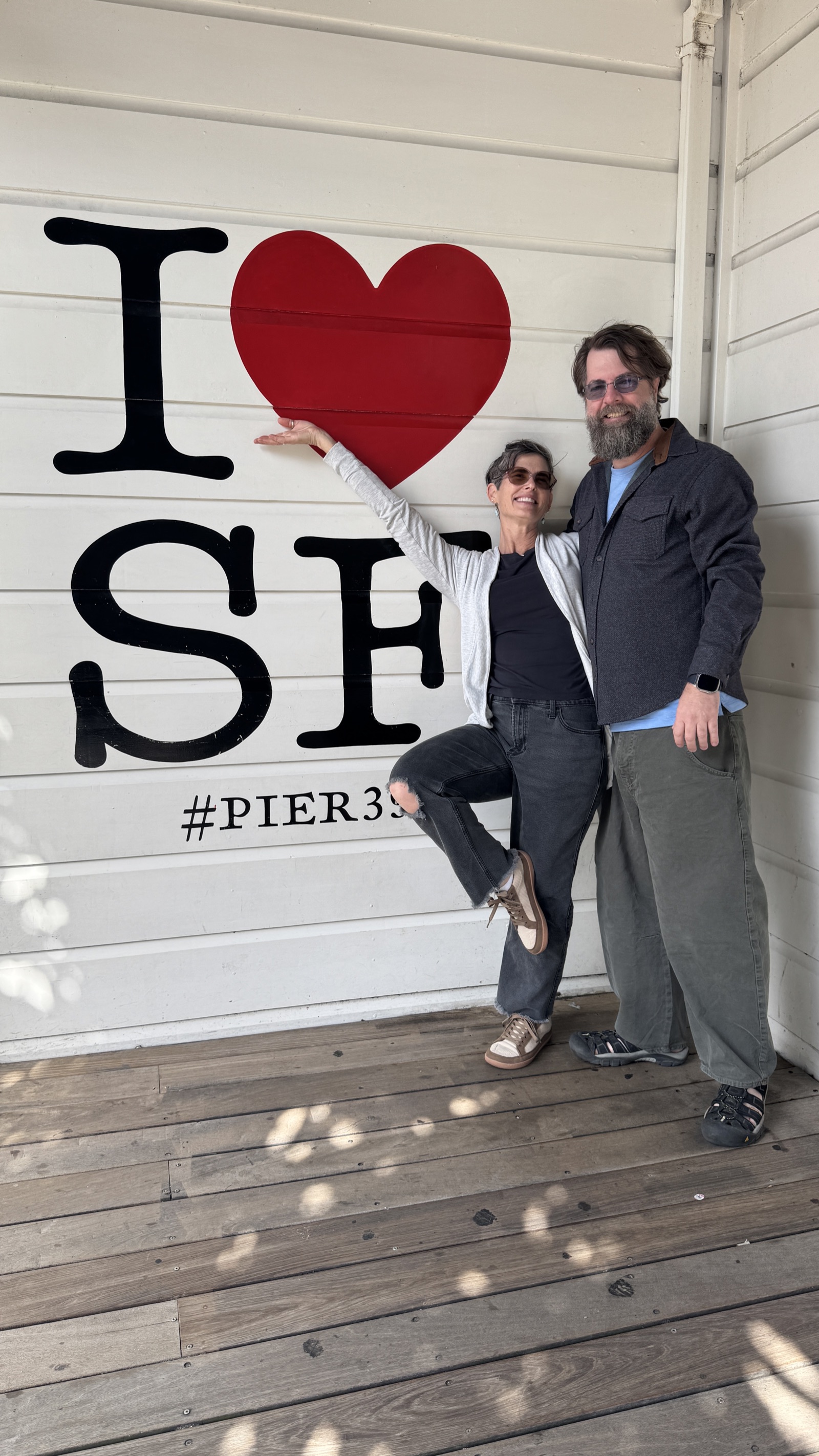
San Francisco, July 2026 — Eliza, who accelerated a lot of this growth from the inside.
How he actually travels
- Slow, on purpose. This chapter is built around a base — currently Bangkok — with shorter trips radiating out from it, not constant movement for its own sake.
- The camera stays in one hand. He films and signs one-handed, holding the phone or camera in the other — a habit from years of narrating in ASL while shooting. It shows up as a distinct visual style: he points at what he's talking about, holds on plaques and signs long enough to read, and lets his face carry the tone a voiceover would.
- Made for people who can't go themselves, too. Some of his audience can't afford to travel, or physically can't. That shapes what he chooses to show and how — the videos are meant to be lived through, not just watched.
- Practical over polished. No hard-coded visa numbers or fees in anything he writes — those change too fast to trust in writing. What he shares is the mindset, the packing, the budgeting, the actual process — the parts that don't expire.
A few things people don't expect
- He couldn't hear an alarm clock and didn't have room in the pack for one of the bed-shaking kind — so for a while, the actual system was drinking two full glasses of water before bed. There were some close calls.
- In Guatemala, a bus stopped in the middle of nowhere and everyone got off. He couldn't hear why, so he followed — and rounded a corner into a pickup truck surrounded by armed men. He was back on that bus faster than he's ever moved.
- At altitude on the Annapurna Circuit, cold hands weren't just uncomfortable — they made it physically harder to sign, which meant harder to talk at all. Standing at the top of Thorong La anyway, he signed that he was “standing above 99% of the entire mountains.”
- He's been diagnosed with Complex PTSD and, more recently, autism. He's never hidden either from the Deaf community, and doesn't intend to start now.
He wrote himself a note once: when you daydream, that's the self you want — use it as the blueprint, and build toward it. Everything since — the two years on the road, the decade of advocacy, the move to Bangkok — has been him following that note, one draft of himself at a time.